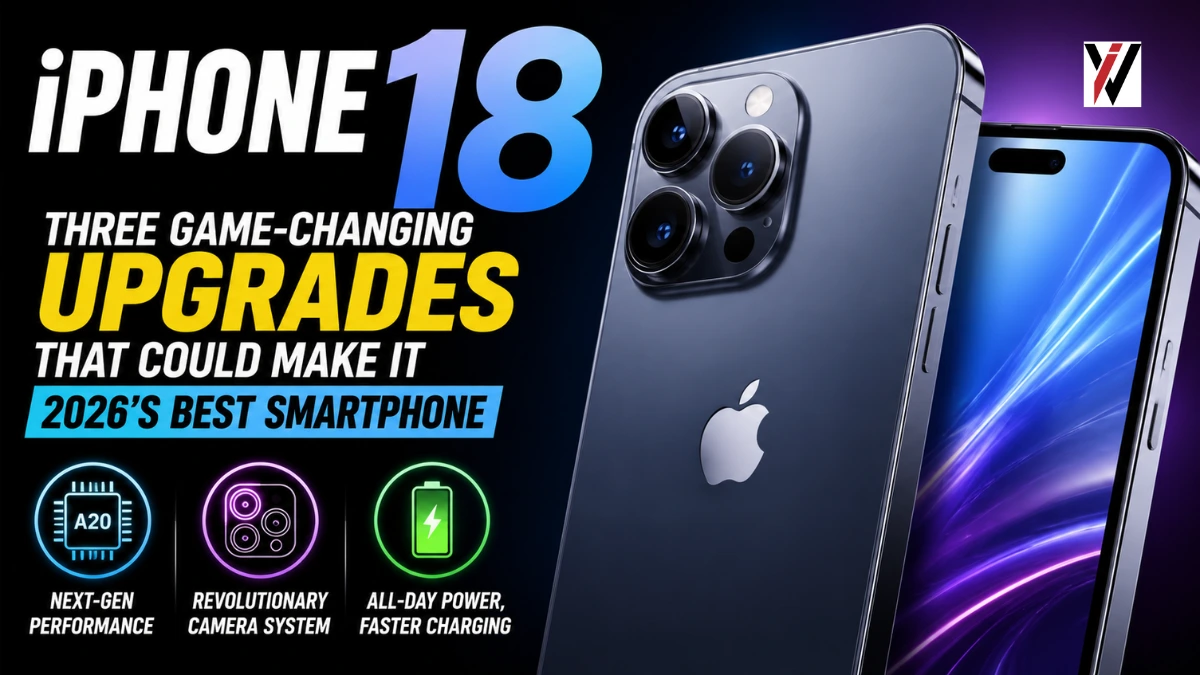
Apple enthusiasts around the world eagerly anticipate each new iPhone release, and despite the current lineup still dominating headlines, speculation about the iPhone 18 series is already generating significant buzz. Leaks and industry reports are painting a picture of a device that could represent one of the most substantial generational leaps in recent memory.
For those considering an upgrade, the question becomes increasingly relevant: should you wait for the iPhone 18? Based on emerging information, the answer may well be yes. Here’s what the rumored three major changes could mean for Apple’s 2026 flagship.
Game-Changing Upgrade #1: Revolutionary Camera Technology
The iPhone’s cameras have long been industry benchmarks, but the iPhone 18 series appears poised to introduce a feature that could elevate smartphone photography to DSLR-like capabilities.
Variable Aperture: The Mechanical Revolution
According to multiple supply chain reports, the iPhone 18 Pro and Pro Max models will feature a variable aperture main camera system . Unlike fixed-aperture lenses on current iPhones, this mechanical iris would adjust automatically to control light intake.
How It Works:
-
In low-light conditions, the aperture opens wider to capture more light, producing brighter, clearer images
-
In bright daylight, it narrows to prevent overexposure and achieve stunning portrait effects with beautifully blurred backgrounds
-
The range is reportedly f/1.5 to f/2.8, offering continuous control rather than just a toggle between two settings
Why This Time It Might Work:
Samsung attempted variable aperture with the Galaxy S9 in 2018 but abandoned it due to limitations. Apple’s implementation is expected to differ fundamentally:
-
The new technology uses continuously variable mechanical iris actuators, unlike Samsung’s binary system
-
Chinese component-maker Sunny Optical has reportedly begun producing these actuators, with camera module assembly starting in mid-2026
-
The A20 Pro chip’s advanced computational photography capabilities will work in tandem with the hardware
Analyst Ming-Chi Kuo estimates the variable aperture component costs approximately 50% more than current camera modules , suggesting Apple is making a significant investment in this technology.
Additional Camera Enhancements
-
Upgraded Front Camera: 24-megapixel selfie camera across all iPhone 18 models (except the 18E)
-
Improved Telephoto Lens: Faster aperture for better low-light performance on Pro models
-
Advanced Ultra-Wide Lens: New chip-on-board packaging technology for better image quality or thinner design
Game-Changing Upgrade #2: Next-Generation Performance with 2nm Chip Technology
Apple’s A-series processors have consistently led the industry, and the iPhone 18 series is expected to introduce the first 2nm chips in a smartphone.
The A20 and A20 Pro: Unprecedented Power
Manufacturing Technology:
-
Built on TSMC’s first-generation 2nm (N2) process
-
Represents a significant leap from the 3nm process used in iPhone 17 series
-
TSMC’s 2nm wafers are estimated to cost $30,000 each, with Apple securing over half of initial production capacity
Performance Expectations:
-
10-15% higher performance at the same power consumption
-
25-30% lower power consumption at the same performance level
-
15% increase in transistor density
New Packaging Innovation:
The A20 series will reportedly adopt Wafer-Level Multi-Chip Module (WMCM) packaging , integrating RAM directly with the CPU, GPU, and neural engine. This could deliver even better efficiency and faster performance.
RAM Upgrade:
Reports suggest the iPhone 18 could feature 12GB of RAM , an increase from the 8GB found in iPhone 17 models, enabling more advanced AI features and smoother multitasking.
Chip Distribution Across Models
| Model | Chip | Key Differentiator |
|---|---|---|
| iPhone 18 | A20 (2nm) | 5-core GPU |
| iPhone 18 Pro | A20 Pro (2nm) | 5-core GPU |
| iPhone 18 Pro Max | A20 Pro (2nm) | 6-core GPU |
Game-Changing Upgrade #3: Radical Design Evolution
Perhaps the most visually striking change could be the display, with Apple reportedly working to minimize or eliminate the Dynamic Island.
Under-Display Face ID: The All-Screen iPhone Vision
Multiple reliable sources indicate Apple is testing under-display Face ID technology for the iPhone 18 Pro models .
What This Means:
-
Face ID sensors would be hidden beneath the screen
-
The camera cutout could be reduced by approximately 35% or moved to the top-left corner
-
Could create a cleaner, more immersive display experience
The Challenge:
Under-display camera technology has historically struggled with image quality. Apple is testing “spliced micro-transparent glass” to allow infrared sensors to work through the display without compromising functionality .
Dynamic Island’s Future:
While the physical cutout may shrink, the Dynamic Island software functionality could remain, adapted to the smaller or relocated camera area.
Revolutionary Launch Strategy
For the first time in iPhone history, Apple may split the launch across two phases :
| Launch Phase | Models | Timing |
|---|---|---|
| Phase 1 | iPhone 18 Pro, Pro Max, Foldable iPhone | September 2026 |
| Phase 2 | iPhone 18, iPhone 18E, iPhone Air 2 | Spring 2027 |
This marks a significant departure from Apple’s traditional all-at-once September release schedule.
Additional Upgrades Worth Noting
Battery Life:
-
Pro models could feature batteries exceeding 5,000 mAh
-
Potential use of silicon-carbon battery technology for improved energy density
-
Up to 25% improvement in 5G signal strength with new C2 modem
Potential Price Increases:
Rising component costs, particularly for the 2nm chips and advanced camera system, may push prices higher, with some estimates suggesting increases of $200-$300 for premium models .
Conclusion: Should You Wait for the iPhone 18?
Based on current information, the iPhone 18 series appears to address three key areas that could make it a compelling upgrade:
-
Camera Innovation: Variable aperture represents a genuine advancement in mobile photography
-
Performance Leap: The 2nm chip process could deliver significant speed and efficiency gains
-
Design Evolution: Under-display Face ID could be the first step toward a truly all-screen iPhone
For users still using iPhones from 2023 or earlier, the iPhone 18 could represent a substantial upgrade. However, those with recent models (iPhone 17 or 17 Pro) might want to wait for real-world reviews before making a decision.
The Verdict: If the leaked features materialize, the iPhone 18 could indeed become the best smartphone of 2026. But as with all pre-launch information, some elements may change before the official announcement. Apple is expected to unveil the iPhone 18 Pro lineup in September 2026, with standard models following in spring 2027.